The advent of the internet and interactive digital mediums have changed the way audiences perceive things. Their different mindsets, emotions, and pain-points can put marketers in a dilemma. It is because they want to generate content that creates the same level of impact on everyone.
Each customer is different and so are their preferences, needs, and interests. They prefer different modes of communication and consume different content forms.
For example, some people might like to watch funny short clips while some people may love hearing inspirational podcasts. While communicating your brand message to a broader audience, you must consider all these things.
You can learn about your audience from social listening. For instance, tracking the number of brand mentions on social media is directly related to your awareness. Similarly, different social listening metrics track customer engagement, competitor strategies, and customer satisfaction. In short, it offers insights into all the aspects of marketing.
TL;DR
- Every audience thinks, behaves, and communicates differently; one message won’t work for everyone.
- Social listening helps you understand what people say, feel, and expect from your brand in real time.
- It reveals cultural differences, trending topics, sentiment shifts, and hidden needs across audience groups.
- These insights help you personalize communication, improve customer experience, refine products, and prevent crises.
- The value isn’t just collecting data, it’s using it to make smarter decisions and take action faster.
- Konnect Insights is the best platform to help you understand the sentiment of your audience and build a better perspective.
The Importance of Understanding the Audience
Understanding your audience isn’t optional anymore; it’s the foundation of how brands communicate, develop products, and build long-term relationships. Customer expectations keep evolving, and what once felt like a rare convenience quickly becomes a standard feature. Online food delivery is a perfect example: what started as a novelty is now something many people rely on daily. Trends like drone-based delivery or AI-powered conversations show how quickly expectations can shift.
People share their thoughts openly online, like opinions, frustrations, preferences, and even unmet needs. These conversations are full of valuable signals, but tracking them manually is unrealistic. This is where social listening becomes essential. It helps you collect, analyse, and understand audience behaviour at scale, giving you a clearer picture of what matters to them and why.
Here’s why knowing your audience deeply makes such a big difference:
1. Tailoring Communication
Different audience groups respond differently to messaging, tone, and content format. What feels inspiring to one region or community may be misunderstood by another. Social listening helps you uncover these subtle cultural cues so you can craft messages that feel relevant and respectful. It also guides you toward the right communication style and channel, whether short videos, emails, or community-driven content, helping your message land the way you intended.
2. Enhancing Customer Experience
When you understand what your audience prefers and how they want to interact, improving their experience becomes far easier. Some people appreciate direct calls, while others prefer email or live chat. Social listening highlights these behavioural patterns so you can create support and engagement experiences that feel natural rather than forced. The result? A smoother journey and higher satisfaction.
3. Supporting Better Decision-Making
Good decisions come from real insight, not assumptions. By analysing audience discussions and reactions, you gain clarity on what they care about and what they ignore. Whether you’re planning product updates, creating campaigns, or improving service, social listening turns guesswork into strategy, helping teams build with confidence.
4. Strengthening Brand Relationships
People connect more deeply with brands that listen and respond. When customers see that their feedback leads to visible changes, even small ones, it builds trust. Social listening enables this two-way connection, especially when paired with tools like Konnect Insights that combine monitoring, analytics, publishing, and engagement in one place. Instead of just observing conversations, you can respond and act on them in real time, creating stronger emotional loyalty.
5. Anticipating Future Needs
Audiences often reveal future expectations long before they become mainstream, through questions, comparisons, and wish-list-style comments. Social listening helps you spot these early indicators so you can stay ahead of trends rather than react later. Being proactive positions your brand as forward-thinking and customer-focused, which can make a significant difference in competitive markets.
The Power of Social Listening
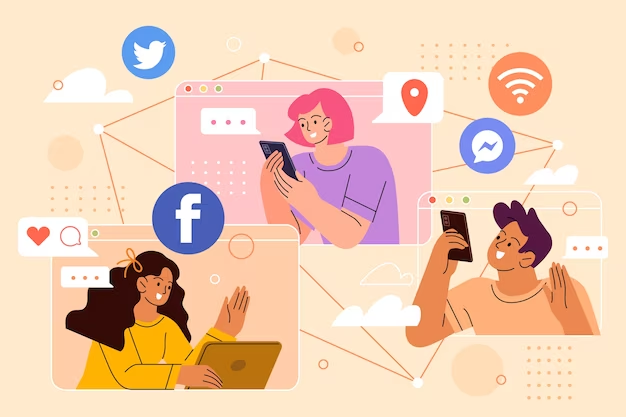
Social listening is powerful because it can be used to improve all aspects of marketing. The tools with social listening capabilities can provide you with insights into your competitor’s strategies. You can also learn about the audience from social listening.
The audience’s needs, opinions, and sentiments can be tracked using advanced analytical tools. These social listening tools also make you aware of the latest industry trends. In my opinion, these aspects highlight the true power of social media listening:
1. Capturing Unfiltered Insights
Primary research is also a good way to collect diverse perspectives of the audience. Yet, it comes with many challenges and in the end, the derived insights may not be of much use. The research can be affected by different types of bias.
For instance, a researcher may prioritise the information that suits his beliefs and opinions. The opinions of the respondents regarding certain organisations or events can make them deflect from their true opinions. This results in respondent bias which affects the research quality. When someone’s opinion or views are heavily influenced by their culture, it leads to cultural bias.
Social listening lets you capture insights that are not filtered by any kind of bias. These unfiltered insights help you understand the diverse perspectives of the audience. Read Why Social Listening And Customer Insights Are Important For Your Brand
2. Identifying Trends and Sentiments
In the business world, it is essential to understand the evolving trends and sentiments of the end users. Without social listening, it is impossible to track them consistently. For example, if you are a clothing brand, you must understand how the preferences of your audience change according to different seasons and festivals.
Not paying heed to customer sentiments can also affect your business negatively. Suppose that you run an electronics store and your customers are not happy with your after-sales support. If you do not address the issue and incorporate the required changes immediately, it can affect your online reputation and sales. With social listening, you can track industry trends and customer sentiments effortlessly.
3. Unveiling Audience Diversity
Audiences can be categorised based on their age, hobbies, occupation, and other details. Social listening highlights the diversity that exists even in a particular audience segment. So, true audience diversity can only be understood if you have access to social listening capabilities.
A food brand can broadly segment its audiences based on their taste preferences. Fast food lovers can be one of those segments. Yet, the wide range of fast food varieties available in the market creates the scope for further classification.
Collecting and assessing these finer details manually would need a lot of time and effort. However, if you use social listening for capturing audience insights, filtering data as per your target audience becomes easy.
Key Techniques for Understanding Audience Perspectives

Follow these key techniques if you are planning to use social listening for audience engagement:
1. Segmenting Audiences
All the social media users cannot be your target customers. So, the first step would be to filter the larger audience based on the preferences and perspectives that matter to your brand.
After that, you must segment the target audience further based on their demographic details, interests, hobbies, and other details. Segmenting the audience also highlights their varying perspectives.
For instance, a political party may segment the audience based on their social, economic, and religious beliefs. Further, they would shape their strategies to target the different perspectives of their target audience.
2. Monitoring Trending Topics
You can establish strong communication with the audience using social listening. Incorporating the latest trends and insights into your content and communication make them relevant to your target audience. Monitoring trending topics unveils the current perspectives of the customers.
Suppose that you are a brand that sells cars. In this case, safety ratings of different cars, safety features, and overall features of cars can be the trending topics. Creating content around trending topics helps you to capture the attention of your audiences. By monitoring the trending news and topics, you can dive deeper into their emotions and perspectives.
Startup brands find trending topics before creating marketing posts and campaigns. By leveraging these topics, they improve their brand reach, visibility, and reputation.
3. Analysing Sentiment Variation
While learning about the audience from social listening, you must also pay attention to their sentiments. Sentiment analysis is a critical process in the online reputation management strategy. The feedback, product reviews, and surveys taken by customers highlight their sentiments regarding the brand and its offerings.
Brands want to know the underlying sentiment of the larger audience to detect whether their strategies are working or not. It is also known as opinion mining. Text analytics tools that use NLP (Natural Language Processing) and ML (Machine Learning) detect whether a given text contains positive, neutral, or negative sentiments.
Using these tools, brands may conduct a sentiment scoring test. In sentiment scoring, scores are given to the tests based on their underlying sentiments. The negative sentiments attract a negative score say -10. Neutral sentiments always get a 0 score, whereas positive sentiments get a positive score like +10.
Any variation in the overall sentiment score gives brands an idea regarding their marketing strategies. If the sentiment score has varied a lot, the brands may use it as an indication to change or upgrade their strategies.
4. Tracking Demographic Insights
If you are thinking of using social listening for audience perspectives and insights, you cannot ignore the demographic insights. Demographic details like age, occupation, gender, spoken languages, location, interests, etc. are usually obtained from a user’s profile.
Conversations based on demographic data can be analysed using social listening. For instance, you can track the issues faced by customers in the age range of 45 to 50. Or else, you can monitor the preferences of a specific high-income audience. Multiple metrics can also be used to filter the conversations as per your target audience.
5. Unearthing Cultural Nuances
While communicating with your audiences, you must consider the nuances related to their language and culture.
Understanding their slags, emotions, values, and other cultural nuances helps you build effective communication strategies. With social listening tools, you can unearth these nuances by tracking location-specific trends and preferences.
For instance, to offer better customer services in a particular location, you can hire a native speaker in your support team. With a native speaker, you can reach out to the local audiences in a way that even the most experienced and talented executives could not. Likewise, even the best research and sentiment analysis is incomplete without uncovering the cultural nuances and insights.
You can use social listening for audience behavior analysis. At the same time, you can also use social listening for audience engagement. For instance, you can detect the influencers that are popular in a certain region or language. By collaborating with these influencers, you can reach out to the audiences in a better way.
Similarly, you can also unearth marketing experts in a particular region. By reaching out to them, you can uncover the business potential and opportunities in that region.
Leveraging Insights for Strategic Action
Employing social listening for audience perspectives and data is just the first step. The actual process begins when you leverage these insights and use them via strategic actions. Here are some actions to be taken based on the insights obtained via social listening:
1. Personalised Content Creation
Customers prefer interacting with marketing messages and content that are related to their specific interests. Personalisation is not just limited to wishing customers on their birthdays and sending them gift cards on their anniversaries.
Let’s say that some of your customers engage more with funny memes and one-liners. Using tools with social listening capabilities you can discover these insights. Further, you can use them to create content that suits your audience’s interests.
Nowadays, customers like brands that offer personalised experiences to make their journeys better. Personalization allows you to add some tweaks to streamline their experience.
2. Product and Service Innovation
If your customers are not happy with your products or services, it will reflect in their conversations. By tracking relevant conversations, social listening helps you uncover the product and service gaps.
Let’s consider a real-life example. The users of Xiaomi 12 Pro in India faced a strange issue with the camera when it first came out. Due to heating issues and condensation, the camera fogged while they recorded 4K videos. When many customers started reporting it via user reviews and feedback, the brand took it seriously. Fortunately, they were able to fix it with a software upgrade on time. As a result, this event did not affect the future sales of the phone model.
Likewise, if your customers highlight any service or product issues, you can share them with your product development or support team. By incorporating the changes, you can resolve their issues. Further, you may convey to the audiences that the issues have been resolved through a post or update.
3. Crisis Management and Prevention
While implementing social listening for audience perspectives and insights, you can encounter some negative comments and feedback. With social listening capabilities like sentiment analytics and scoring, you can flag the issues that can turn into a crisis.
With NLP and machine learning, you can track the conversations that have an underlying negative sentiment. Even simple metrics like product/service ratings can help you uncover such sentiments.
For example, you can track the customers who have given only a ‘1’ rating out of 5 for your product/services. By communicating with these customers personally, you can try to understand their issues. With such proactive measures, you can prevent a social media crisis and maintain your brand reputation.
Future Trends in Audience Understanding

Nowadays, more people use voice assistants to search for details related to specific products and services. By unearthing such trends, social listening helps you to understand audience perspectives better.
Social listening is a continuous process. By employing predictive analysis and social listening for audience insights, you can also predict future trends. One needs to watch out for these future trends in the market:
1. AI-Driven Audience Segmentation
AI is already being used to communicate with the customers. For instance, we see virtual assistants and bots being used to address customer concerns and queries.
Likewise, brands may use data-driven algorithms to create audience segments. By employing clustering techniques, they may group audiences based on their preferences, needs, and demographics. Further, audiences may be segmented based on their loyalty, value, and proposed potential.
2. Real-time Insights and Response
One of the social listening capabilities is providing you with real-time access to customer conversations. By using advanced analytics and AI, brands may obtain real-time insights in the future.
Also, they may use automated tools to generate immediate responses. Using such strategies, brands may streamline their reputation and manage an ongoing crisis far more efficiently!
3. Integration with Personalisation Tools
Brands are already using AI-powered personalisation to offer better customer experiences. In the future, you may see brands using AI to send personalised product recommendations to their customers.
For example, Amazon uses Amazon Personalize, a system that uses machine learning to recommend customers to clear their shopping carts. At the same time, this system also suggests products based on their shopping history and preferences. You may see brands integrating more of such tools and systems into their communication channels.
Conclusion
By now, you should understand the true potential of social listening. Using social listening to gain audience perspectives is just one side of the coin. The real difference between you and your competitors will be created when you integrate these insights into your communication system.
Konnect Insights is a customer experience management suite. It not only helps you uncover relevant customer insights but also helps you leverage them to create seamless customer journeys. With social listening, social publishing, BI (Business Intelligence), and ORM (Online Reputation Management, it has everything you need to understand customer sentiments and drive customer engagement.
Frequently Asked Questions
1. How does social listening help in understanding audience diversity?
It reveals differences in culture, language, interests, age groups, and behaviours, all of which matter when tailoring communication or campaigns.
2. Can social listening improve customer experience?
Yes. It helps you see what customers like, dislike, or struggle with. With that information, you can refine support, communication channels, and user experience.
3. How does sentiment analysis fit into social listening?
Sentiment analysis identifies whether audience conversations are positive, negative, or neutral. This helps brands measure perception and react quickly when needed.
4. Can social listening help prevent brand crises?
Absolutely. Early signs of frustration, complaints, or negative behaviour can be flagged and handled before they escalate into a public issue.
5. Does social listening only track brand mentions?
No. It also tracks competitor activity, trending topics, product feedback, customer interests, and industry shifts.
6. How does social listening support personalised communication?
It reveals what different audience groups prefer, whether it’s content style, product preferences, tone, or communication channels. That insight helps personalize at scale.
7. Can social listening improve product development?
Yes. Customer feedback often reveals gaps, missed features, or pain points. Brands can use those insights to fix issues or innovate new solutions.