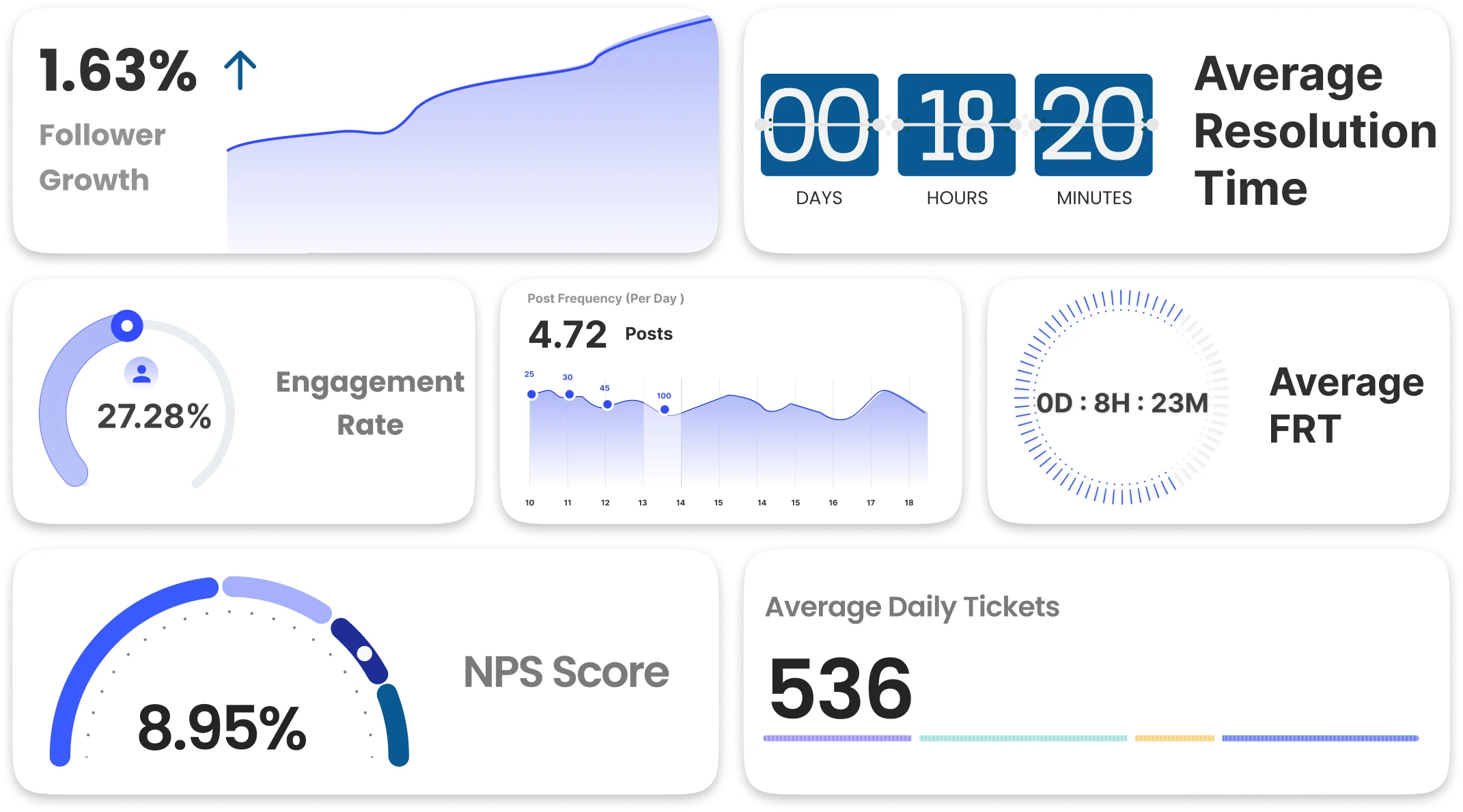
Automobile Industry Monthly CXM Report: November 2025

November was an active month for the automobile sector, with customer interest staying high and conversations continuing across launches, service experiences, and ownership queries. Engagement remained strong, showing that customers are paying attention and willing to interact with brands. At the same time, service timelines stretched, and sentiment softened, indicating that operational follow-through is not keeping pace with customer expectations.
With engagement at 27.28% and more than 500 daily tickets, the pressure on CX teams was visible throughout the month. Customers are asking questions, raising issues, and expecting clarity quickly. While brands are staying visible and responsive, the experience is increasingly shaped by how long it takes to close the loop rather than how quickly the first reply arrives.
KPI Snapshot
| KPI | Value |
| Follower Growth | 1.63% |
| Engagement Rate | 27.28% |
| Post Frequency (per day) | 4.72 |
| First Response Time (FRT) | 8 hours, 23 minutes |
| Average Resolution Time | 18 hours, 20 minutes |
| Net Promoter Score (NPS) | 8.95% |
| Average Daily Tickets | 536 |
CXM Diagnosis
Customer interest in the automobile category remains strong. A near 30% engagement rate suggests high emotional investment, whether around new models, EV conversations, or service-related discussions. However, the experience begins to slip once customers move from conversation to support. An 8-hour FRT feels slow in a market where buyers expect quick acknowledgment, especially during delivery, service, or booking-related queries.
Resolution timelines stretching beyond 18 hours further compound frustration. With 536 tickets per day, unresolved issues pile up quickly, leading to repeat follow-ups and declining patience. The NPS of 8.95% shows that while sentiment is still positive, it is fragile. Customers are satisfied with outcomes when they arrive, but the journey to reach them feels longer and more effort-driven than it should.
What’s Driving Customer Frustration or Sentiment
- Delays in responding to service and dealership-related queries
- Slow updates on vehicle delivery timelines and documentation
- Inconsistent communication between brand teams and local dealerships
- Limited proactive updates during service or repair delays
- Positive sentiment when issues are resolved clearly and without escalation
CX Priorities for December
- Reduce first response time for high-intent queries such as delivery, service, and test drives
- Bring resolution time closer to same-day closure for common ownership and service issues
- Improve coordination between central support teams and dealership networks
- Share proactive updates during delays to reduce follow-up volume
- Use NPS feedback to identify friction points across the ownership journey
Final Word
November highlights a familiar challenge for automobile CX. Customers are engaged, informed, and invested, but increasingly impatient with slow follow-through. Speed of acknowledgment gets attention, but confidence is built through decisive resolution. The brands that strengthen coordination and close issues faster will turn interest into loyalty and transactions into long-term trust.
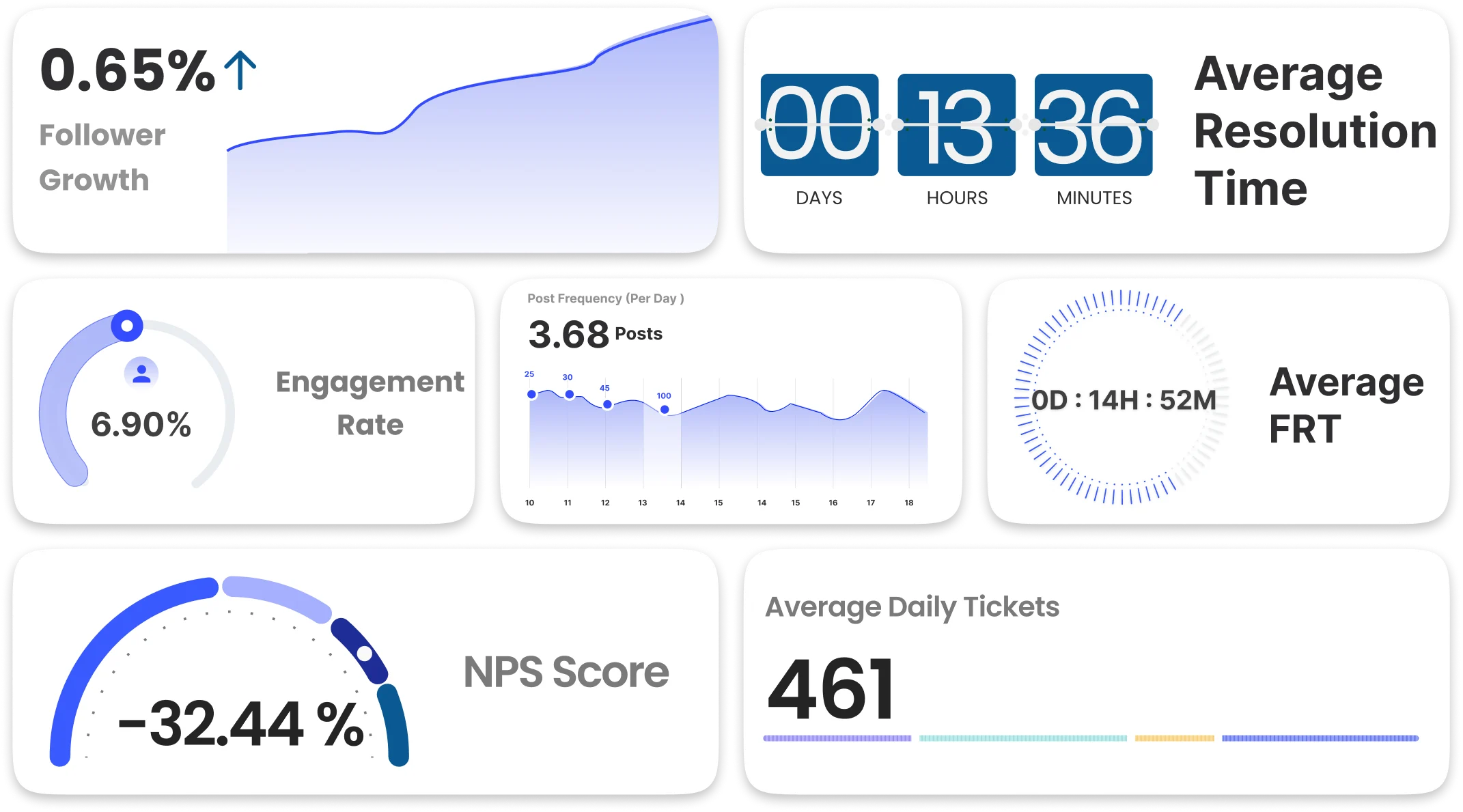
Fast-Moving Consumer Goods (FMCG) Beverage Industry Monthly CXM Report: November 2025

November was a demanding month for the FMCG sector, with customer volume remaining high and tolerance continuing to drop. While engagement stayed active, the overall experience was shaped more by service delays than by brand affinity. Customers interacted often, but largely to resolve issues rather than to engage positively with brands.
With 461 daily tickets, FMCG teams were operating under sustained pressure. The data shows that customers were not ignored, but they were not reassured either. In a category built around convenience and everyday reliability, long waits for acknowledgment quickly translate into dissatisfaction.
KPI Snapshot
KPI | Value |
Follower Growth | 0.65% |
Engagement Rate | 6.90% |
Post Frequency (per day) | 3.68 |
First Response Time (FRT) | 14 hours, 52 minutes |
Average Resolution Time | 13 hours, 36 minutes |
Net Promoter Score (NPS) | -32.44% |
Average Daily Tickets | 461 |
CXM Diagnosis
The nearly 15-hour first response time is the most damaging signal this month. For product quality complaints, missing items, or delivery-related issues, customers expect acknowledgment within hours, not half a day. This delay sets a negative tone before the issue is even addressed.
Resolution time, while shorter than response time, still fails to offset the initial frustration. The negative NPS of -32.44% indicates that customers are leaving interactions dissatisfied, even when problems are eventually solved. With ticket volume this high, slow acknowledgment amplifies follow-ups, escalations, and public complaints.
What’s Driving Customer Frustration or Sentiment
- Long waits before product complaints are acknowledged
- Repeated follow-ups required to get basic updates
- Limited clarity on replacements, refunds, or timelines
- Inconsistent communication tone across channels
- Positive sentiment when issues are resolved cleanly in a single interaction
CX Priorities for December
- Reduce first response time to under 3 hours for all customer issues
- Prioritize acknowledgment during high-volume periods to reduce escalation
- Streamline workflows for common complaints like damage or missing items
- Introduce proactive updates once a case is logged
- Use negative NPS feedback to identify breakdowns in early-stage handling
Final Word
November highlights a clear FMCG CX challenge. Customers expect speed and certainty for everyday products, and long waits break that expectation quickly. The brands that recover next month will be those that respond early, communicate clearly, and treat service speed as part of the product itself.
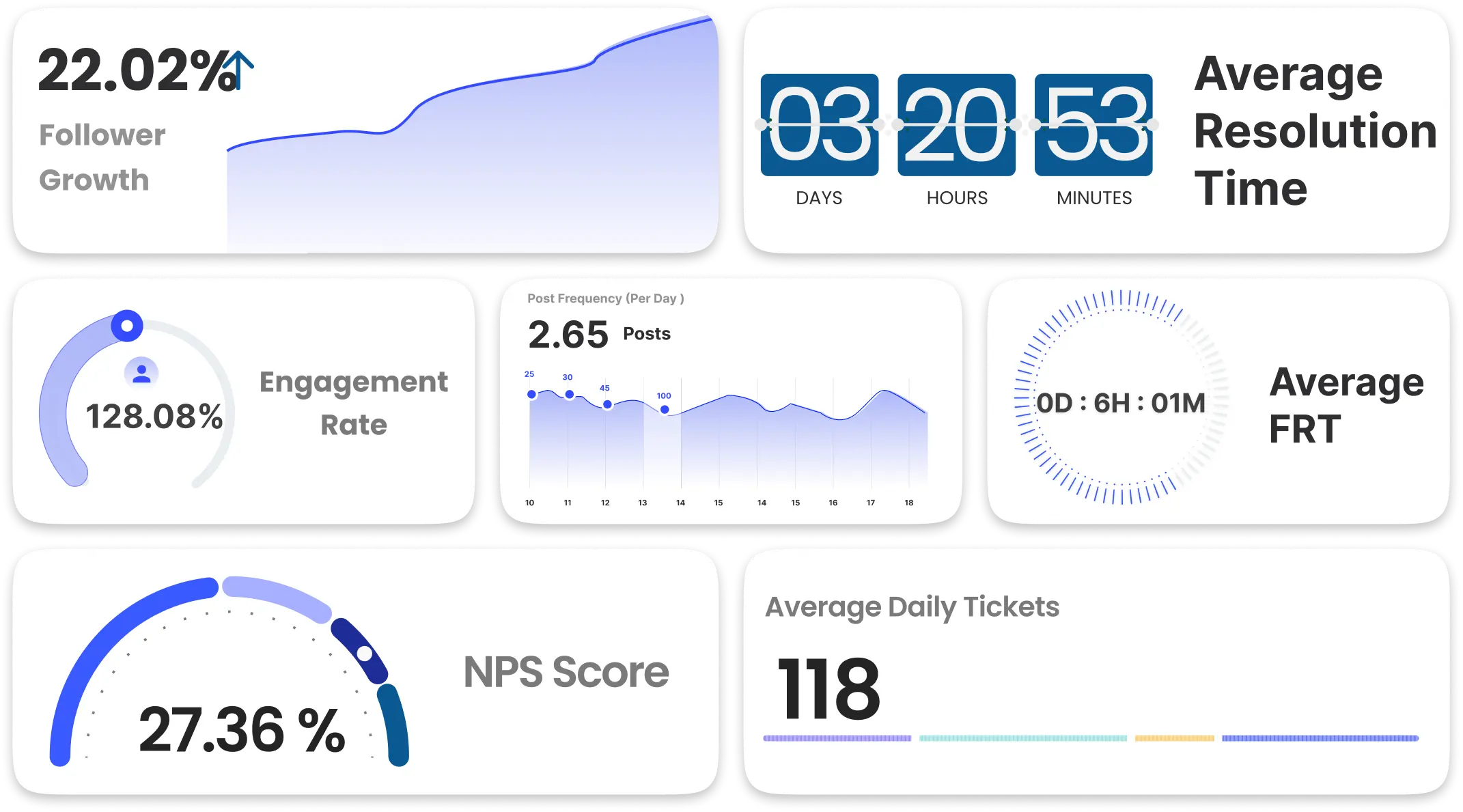
EdTech Industry Monthly CXM Report: November 2025

November was a breakout month for the Edtech sector in terms of visibility and conversation. Audience growth surged, engagement spiked dramatically, and brands found themselves at the center of attention across learning outcomes, results, and platform performance. However, the service experience struggled to keep pace with this momentum, creating a clear gap between interest and execution.
With engagement crossing 128% and follower growth above 22%, Edtech brands attracted intense attention. Much of this came from high-stakes moments such as enrollments, exams, renewals, and results. While customers were eager to engage, the experience that followed often tested their patience, especially when issues took days to resolve.
KPI Snapshot
KPI | Value |
Follower Growth | 22.02% |
Engagement Rate | 128.08% |
Post Frequency (per day) | 2.65 |
First Response Time (FRT) | 6 hours, 1 minute |
Average Resolution Time | 3 days, 20 hours, 53 minutes |
Net Promoter Score (NPS) | 27.36% |
Average Daily Tickets | 118 |
CXM Diagnosis
The scale of engagement this month is impossible to ignore. A 128% engagement rate signals intense involvement from students, parents, and educators. Initial acknowledgment within 6 hours is acceptable given the volume, but it is not enough to offset what happens next.
Resolution timelines stretching close to four days create serious friction in an industry where delays directly affect learning, assessments, and confidence. With 118 daily tickets, this is not an overload issue. It points to backend complexity, academic dependencies, and slow escalation paths. The NPS of 27.36% remains positive, suggesting trust in outcomes, but that trust is under strain as delays increase effort for customers.
What’s Driving Customer Frustration or Sentiment
- Long waits to resolve access, login, or course availability issues
- Delays in addressing exam, result, or certification-related queries
- Limited updates while issues remain open
- Confusion around subscriptions, renewals, or eligibility
- Positive sentiment when issues are resolved clearly and followed up personally
CX Priorities for December
- Reduce resolution time for learning-critical issues to under 24 hours
- Improve proactive updates during exams, results, and enrollment peaks
- Separate academic-impact issues from general support for faster handling
- Strengthen escalation paths for time-sensitive learner concerns
- Use high-engagement conversations to surface and fix recurring CX gaps
Final Word
November shows Edtech at a crossroads. Interest is booming, trust is still present, but patience is wearing thin. Growth brings responsibility, especially when learning outcomes are at stake. The platforms that succeed next month will be those that match their reach with reliability and ensure that every learner feels supported when it matters most.
Apparel Industry Monthly CXM Report: November 2025

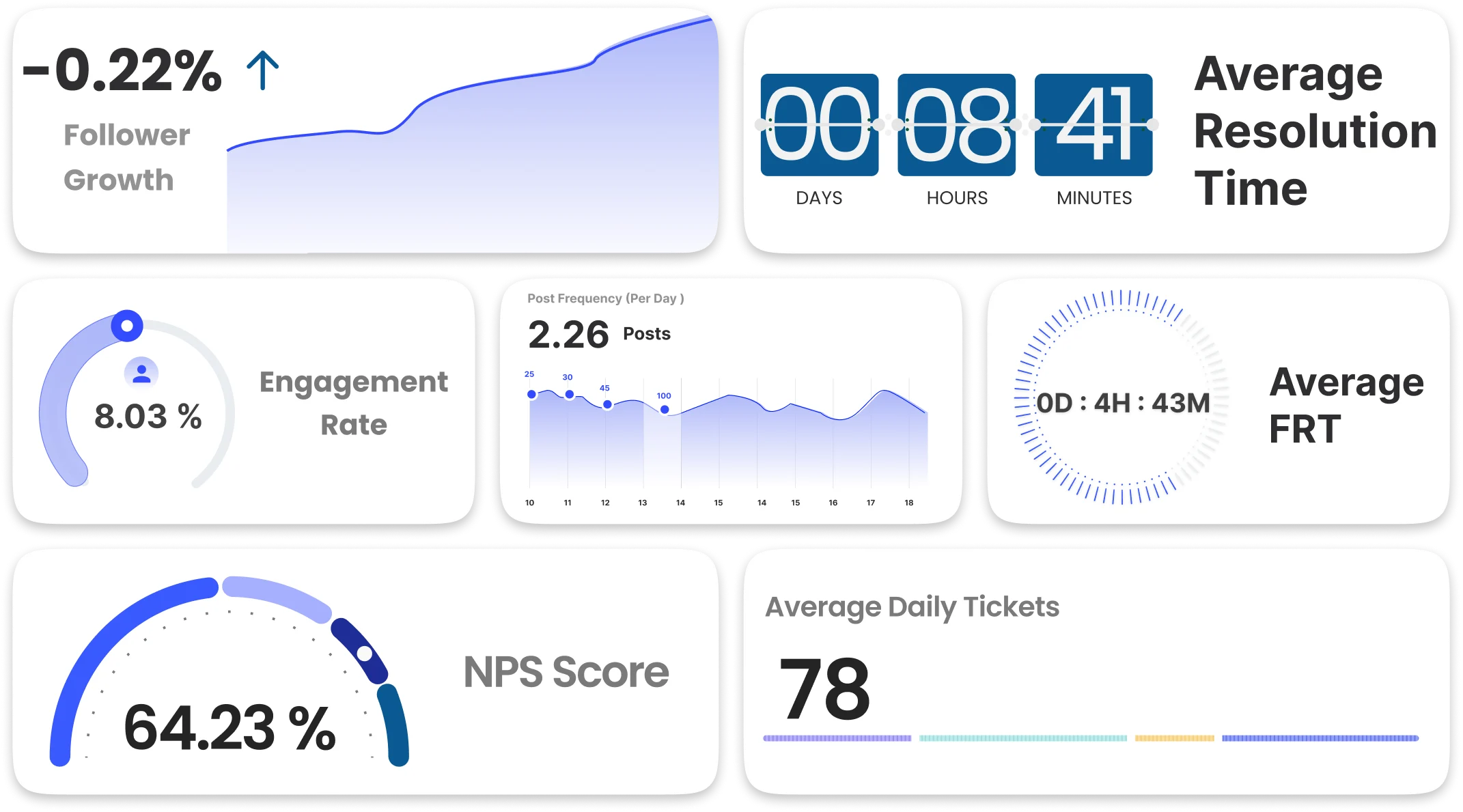
November was a solid month for the apparel and lifestyle sector, especially from a customer satisfaction standpoint. While audience growth dipped slightly, engagement stayed healthy and service performance remained strong. The data shows that when customers reached out, their issues were handled quickly and effectively, reinforcing confidence in the overall experience.
With engagement at 8.03%, customers continued to interact around orders, sizing, exchanges, and delivery questions. Fast acknowledgment and same-day resolutions played a major role in keeping sentiment high, even as visibility softened. In fashion and lifestyle, how issues are handled matters as much as the product itself.
KPI Snapshot
KPI | Value |
Follower Growth | -0.22% |
Engagement Rate | 8.03% |
Post Frequency (per day) | 2.26 |
First Response Time (FRT) | 4 hours, 43 minutes |
Average Resolution Time | 8 hours, 41 minutes |
Net Promoter Score (NPS) | 64.23% |
Average Daily Tickets | 78 |
CXM Diagnosis
A first response time under 5 hours sets a positive tone for customer interactions, especially for time-sensitive queries related to delivery or exchanges. Resolution within 9 hours ensures issues are closed before frustration builds. This operational consistency directly reflects in the NPS of 64.23%, one of the strongest scores across industries this month.
Ticket volumes at 78 per day are manageable, allowing teams to maintain personalization and clarity in responses. Even with slightly lower follower growth, customer confidence remains strong because the experience feels reliable and human.
What’s Driving Customer Frustration or Sentiment
- Occasional delays during peak sale periods
- Clarifications around size availability and exchange eligibility
- Delivery coordination issues in select locations
- Positive sentiment driven by smooth exchanges and quick refunds
- Strong appreciation for polite, empathetic communication
CX Priorities for December
- Maintain fast response and resolution times during seasonal sales
- Prepare support teams for volume spikes around promotions
- Continue proactive updates for shipping and exchanges
- Leverage high NPS feedback in loyalty and referral programs
- Monitor post-sale CX closely to prevent service dips during high demand
Final Word
November confirms apparel and lifestyle’s CX strength. Even with softer growth, customers remain loyal when service is fast, fair, and empathetic. The brands that sustain this momentum through peak season will turn satisfied shoppers into long-term advocates and keep experience at the center of their style story.
Consumer Packaged Goods (CPG) Industry Monthly CXM Report: November 2025

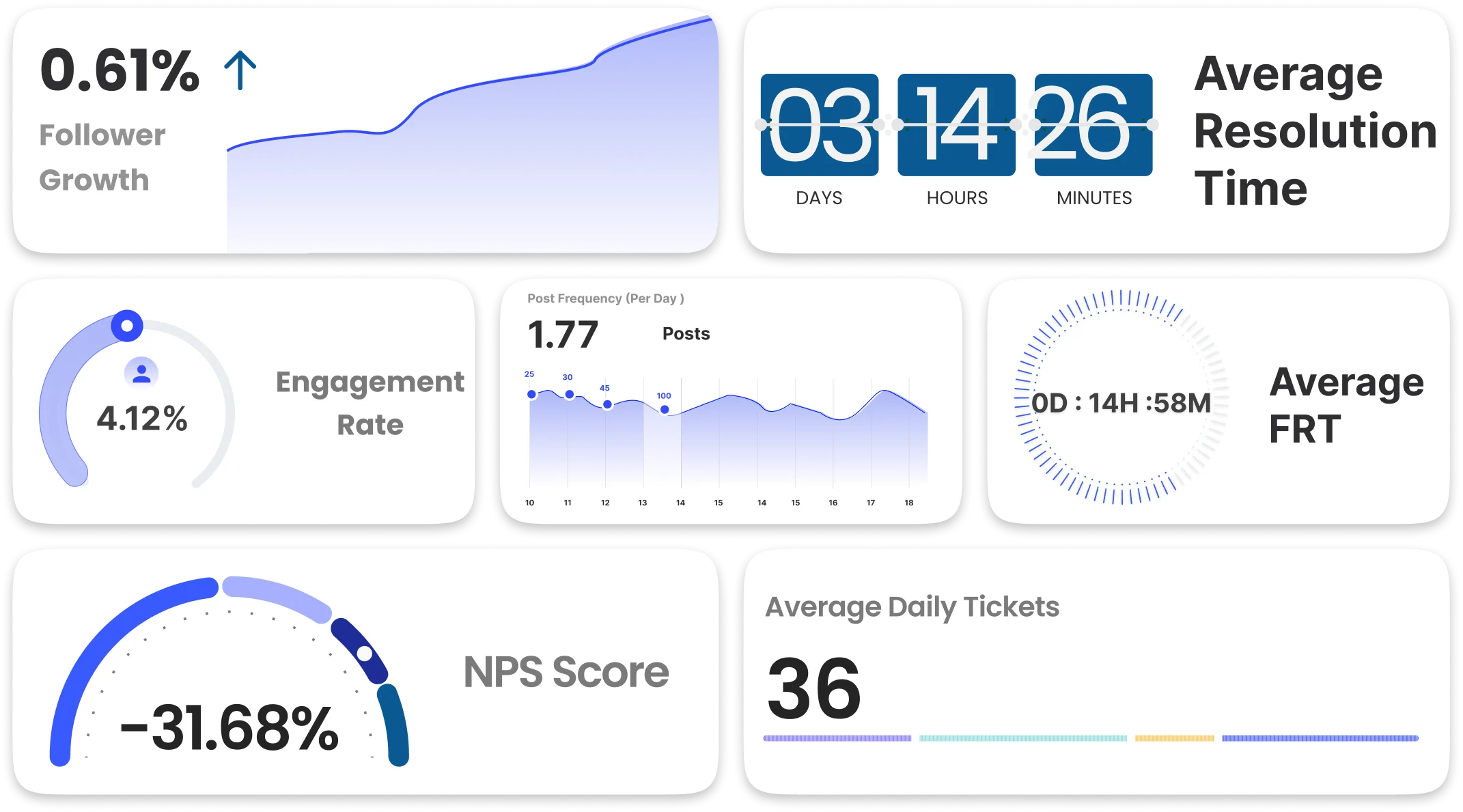
November exposed a growing disconnect between brand presence and customer experience in the CPG sector. While brands continued to show up consistently, customers were left waiting too long for answers and far too long for closure. In a category built on everyday usage and quick replacement, slow service quickly turns into frustration.
Engagement stayed modest at 4.12%, suggesting that most conversations were reactive rather than driven by brand affinity. With sentiment dropping further into negative territory, it is clear that customers are judging CPG brands less on product quality and more on how issues are handled after purchase.
KPI Snapshot
KPI | Value |
Follower Growth | 0.61% |
Engagement Rate | 4.12% |
Post Frequency (per day) | 1.77 |
First Response Time (FRT) | 14 hours, 58 minutes |
Average Resolution Time | 3 days, 14 hours, 26 minutes |
Net Promoter Score (NPS) | -31.68% |
Average Daily Tickets | 36 |
CXM Diagnosis
The nearly 15-hour first response time sets the tone for a poor experience. Customers reporting damaged products, missing items, or quality issues expect quick acknowledgment. Waiting most of a day signals low urgency, even when the issue itself is simple.
The situation worsens at the resolution stage. An average resolution time of more than three and a half days is misaligned with customer expectations for fast-moving consumer goods. With only 36 daily tickets, this is not a volume problem. It is a process problem. The NPS of -31.68% reflects growing impatience and diminishing goodwill toward brands that feel slow and distant.
What’s Driving Customer Frustration or Sentiment
- Slow acknowledgment of product complaints and quality issues
- Excessive time to process replacements or refunds
- Lack of interim updates once a complaint is registered
- Customers unsure whether their issue is being actively handled
- Positive sentiment when issues are resolved cleanly without repeated follow-ups
CX Priorities for December
- Reduce first response time to under 4 hours for all product-related queries
- Bring resolution time closer to 24 hours for replacements and refunds
- Automate status updates so customers are not forced to follow up
- Simplify complaint workflows for low-complexity issues
- Use negative NPS feedback to identify recurring breakdowns in post-purchase support
Final Word
November highlights a serious risk for CPG brands. When everyday products come with slow, uncertain service, customers do not wait around. They switch. Speed and clarity are now as important as price and availability. The brands that recover next month will be the ones that treat service as part of the product, not an afterthought.
Real Estate Industry Monthly CXM Report: November 2025

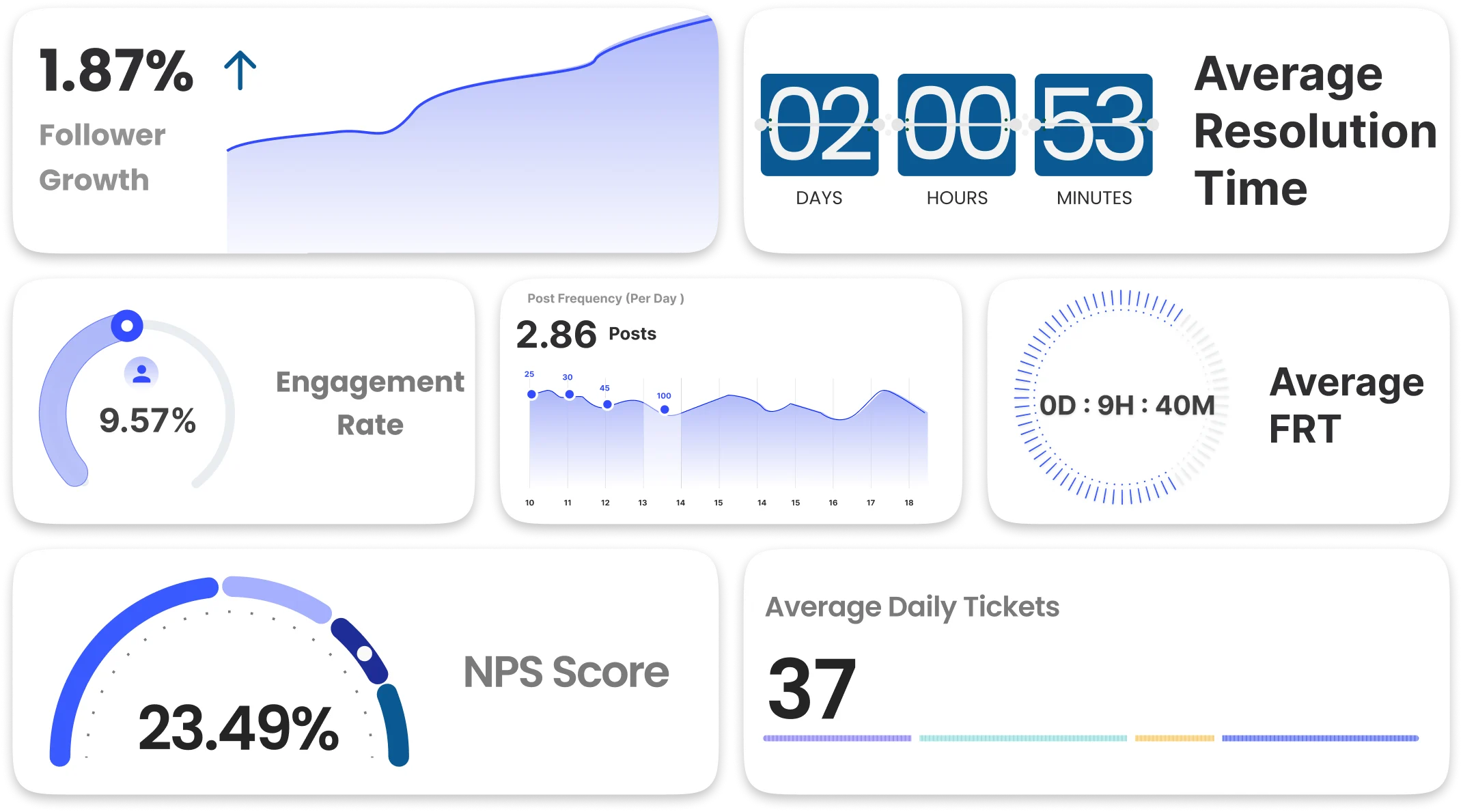
November was a steady month for the real estate sector, marked by healthy interest but slow follow-through. Customer engagement remained strong, reflecting continued demand across inquiries, site visits, and project updates. However, service timelines lagged behind expectations, creating friction in a category where timing and trust are closely linked.
With engagement at 9.57% and a positive NPS of 23.49%, customers are generally satisfied with outcomes when they receive them. The concern lies in how long it takes to get there. Delays in acknowledgment and resolution introduce uncertainty at moments when buyers and tenants are making high-stakes decisions.
KPI Snapshot
| KPI | Value |
| Follower Growth | 1.87% |
| Engagement Rate | 9.57% |
| Post Frequency (per day) | 2.86 |
| First Response Time (FRT) | 9 hours, 40 minutes |
| Average Resolution Time | 2 days, 0 hours, 53 minutes |
| Net Promoter Score (NPS) | 23.49% |
| Average Daily Tickets | 37 |
CXM Diagnosis
Interest in real estate remains strong, as seen in the nearly 10% engagement rate. Customers are actively asking questions and seeking clarity before committing. However, an average first response time of nearly 10 hours feels slow in a market where quick follow-ups often determine conversion.
Resolution timelines stretching to two days further test patience. With only 37 daily tickets, these delays point to coordination gaps rather than workload issues. The positive NPS suggests customers trust the brand once clarity is delivered, but that trust is fragile and easily shaken by prolonged silence or unclear updates.
What’s Driving Customer Frustration or Sentiment
- Slow acknowledgment of pricing, availability, and documentation queries
- Delayed updates on site visits, bookings, or approvals
- Lack of proactive communication during ongoing negotiations
- Customers having to follow up repeatedly for basic information
- Positive sentiment when communication is clear, timely, and personalized
CX Priorities for December
- Reduce first response time for all high-intent inquiries to under 3 hours
- Provide same-day updates for availability, pricing, and documentation
- Improve coordination between sales, marketing, and support teams
- Share proactive status updates during longer transaction cycles
- Use NPS feedback to identify moments where delays cause the most anxiety
Final Word
November reinforces a core reality in real estate CX. Customers are willing to wait for the right property, but not for basic communication. Speed and clarity shape confidence long before contracts are signed. The brands that move faster and communicate better will convert interest into commitment and trust into long-term relationships.
Hospitality Industry Monthly CXM Report: November 2025

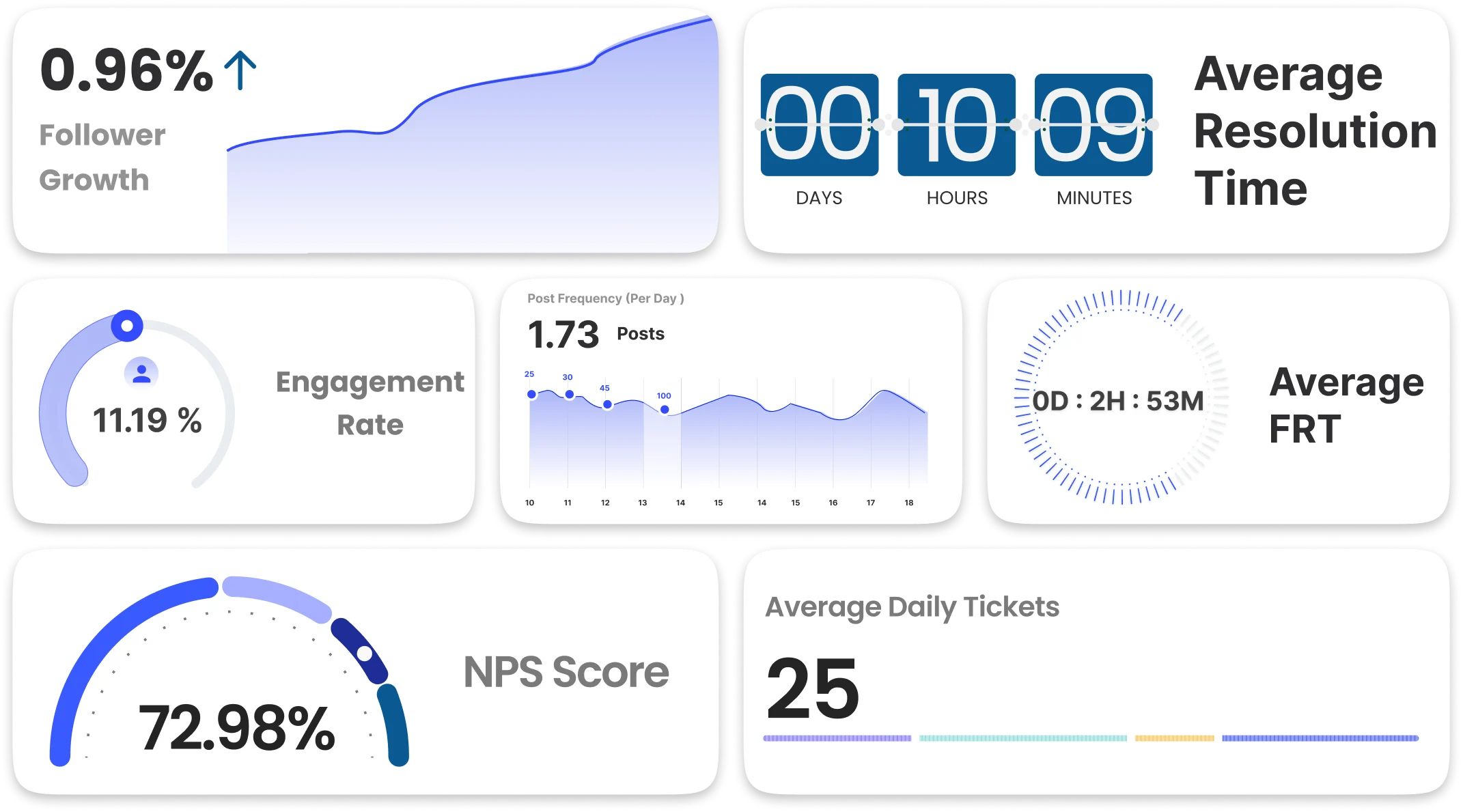
November was a strong month for the hospitality sector, reinforcing why this industry often sets the benchmark for customer experience. Guest interactions remained warm, service was timely, and sentiment reached exceptional levels. The data reflects an industry that understands the emotional side of CX and delivers when it matters most.
Engagement stayed healthy at 11.19%, driven by guest feedback, seasonal travel conversations, and post-stay interactions. More importantly, service performance matched expectations. Fast acknowledgment and same-day resolution helped ensure that small issues did not overshadow the overall experience.
KPI Snapshot
KPI | Value |
Follower Growth | 0.96% |
Engagement Rate | 11.19% |
Post Frequency (per day) | 1.73 |
First Response Time (FRT) | 2 hours, 53 minutes |
Average Resolution Time | 10 hours, 9 minutes |
Net Promoter Score (NPS) | 72.98% |
Average Daily Tickets | 25 |
CXM Diagnosis
The hospitality sector continues to benefit from fast, human-centered service. A first response time under 3 hours ensures guests feel acknowledged quickly, while resolutions completed within 10 hours prevent issues from lingering into negative memories. With just 25 daily tickets, teams are able to give each interaction the attention it deserves.
The standout metric is the NPS of 72.98%, one of the highest across all industries. This reflects more than efficiency. It reflects emotional satisfaction. Guests feel cared for, listened to, and respected throughout their journey, even when something goes wrong.
What’s Driving Customer Frustration or Sentiment
- Occasional delays in handling booking changes or special requests
- Minor service issues during peak occupancy periods
- Gaps between online promises and on-property execution
- Positive sentiment driven by staff responsiveness and personalized attention
- Strong appreciation for proactive communication before and during stays
CX Priorities for December
- Maintain sub 3-hour response times during peak holiday travel
- Preserve service consistency across properties and locations
- Empower frontline staff to resolve issues without escalation
- Use positive feedback to reinforce service standards across teams
- Continue proactive guest communication before arrival and post-stay
Final Word
November confirms hospitality’s CX advantage. When speed, empathy, and accountability come together, customer loyalty follows naturally. With sentiment at record highs, the opportunity now is to sustain this standard during seasonal spikes and ensure every guest leaves with a reason to return.
Telecommunications (Telecom) Industry Monthly CXM Report: November 2025
November was another demanding month for the telecom sector, marked by steady interaction but strained sentiment. Customers continued to reach out frequently for support, yet satisfaction remained firmly negative. The data reflects an industry that is responding faster, but still not resolving issues in a way that restores confidence.
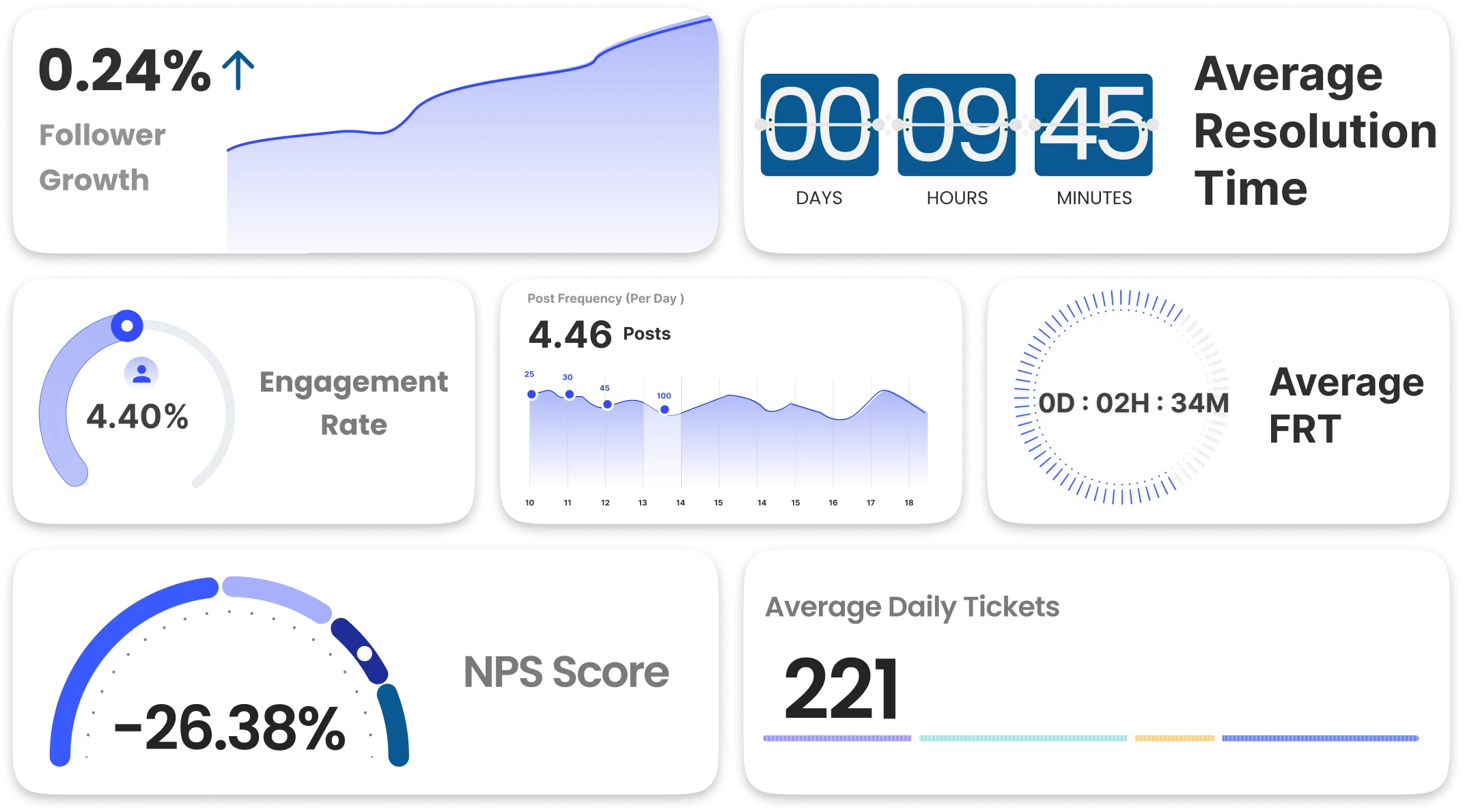
Engagement held at 4.40%, indicating consistent customer contact across channels. However, most of this interaction was problem-driven. With expectations around connectivity, billing, and uptime running high, even small gaps in experience quickly escalate into frustration.
KPI Snapshot
KPI | Value |
Follower Growth | 0.24% |
Engagement Rate | 4.40% |
Post Frequency (per day) | 4.46 |
First Response Time (FRT) | 2 hours, 34 minutes |
Average Resolution Time | 9 hours, 45 minutes |
Net Promoter Score (NPS) | -26.38% |
Average Daily Tickets | 221 |
CXM Diagnosis
On the surface, responsiveness looks solid. A first response time of under 3 hours shows that telecom brands are actively monitoring and acknowledging customer issues. Resolution within 10 hours is operationally reasonable and places telecom ahead of several other high-volume industries.
Despite this, the NPS of -26.38% highlights a deeper problem. Customers feel heard, but not reassured. Many issues recur, explanations feel incomplete, and fixes do not always hold. With 221 daily tickets, volume alone does not explain the dissatisfaction. The gap lies in resolution quality, clarity, and follow-through.
What’s Driving Customer Frustration or Sentiment
- Repeated complaints about billing errors and unclear charges
- Network disruptions during peak usage periods
- Limited proactive communication during outages or maintenance
- Customers having to contact support multiple times for the same issue
- Positive sentiment when agents provide clear explanations and firm timelines
CX Priorities for December
- Improve resolution depth so issues do not resurface after closure
- Increase transparency around billing changes and service plans
- Communicate outages and maintenance proactively across channels
- Equip agents with better context to avoid repeat explanations
- Use NPS feedback to identify recurring failure points in the service journey
Final Word
November shows telecom CX at a crossroads. Faster responses are no longer enough to win trust. Customers judge the experience by how reliably problems stay fixed and how clearly brands communicate when things go wrong. The operators that focus on resolution quality, not just speed, will be the ones that begin to reverse negative sentiment and rebuild confidence.
Electronics Industry Monthly CXM Report: November 2025

November highlighted a familiar challenge for the electronic accessories segment. Brands remained visible and active, but customer satisfaction continued to lag. Conversations were largely driven by support needs rather than excitement around products, and delays in service kept sentiment under pressure. In a category where customers expect quick fixes and fast replacements, slow follow-through hurts more than it should.
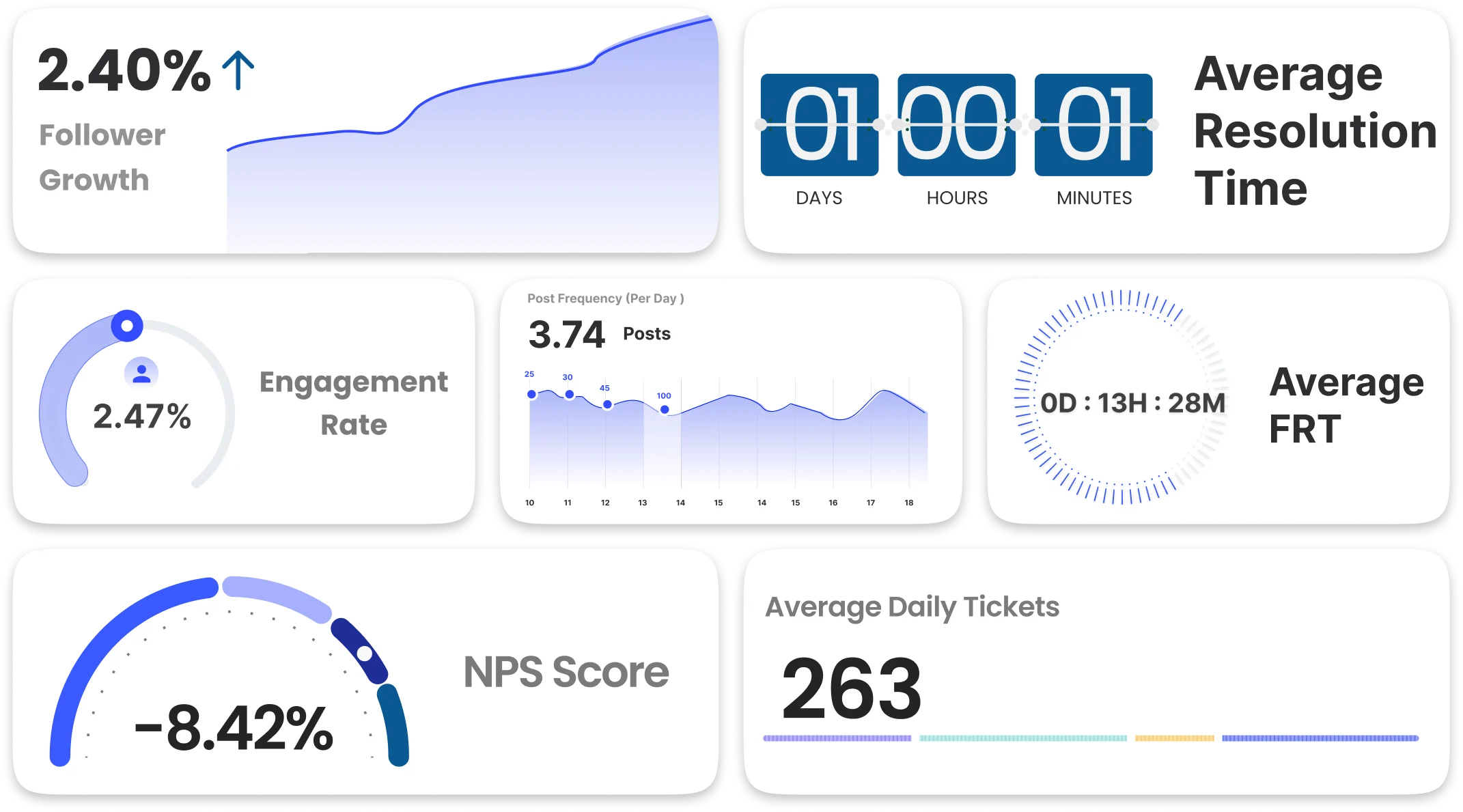
Engagement stayed low at 2.47%, suggesting limited emotional connection with the brand. Even as follower growth improved, the experience customers encountered after reaching out failed to reinforce confidence. The result was continued dissatisfaction despite steady activity across channels.
KPI Snapshot
KPI | Value |
Follower Growth | 2.40% |
Engagement Rate | 2.47% |
Post Frequency (per day) | 3.74 |
First Response Time (FRT) | 13 hours, 28 minutes |
Average Resolution Time | 1 day, 1 minute |
Net Promoter Score (NPS) | -8.42% |
Average Daily Tickets | 263 |
CXM Diagnosis
A 13-hour first response time sets the wrong tone for customer experience in this category. Most queries relate to compatibility, defects, delivery, or warranty issues. Customers expect these to be acknowledged quickly, and long waits signal low urgency.
Resolution timelines extending beyond a full day further compound frustration. With 263 daily tickets, volume is not insignificant, but it is manageable. The negative NPS of -8.42% shows that customers are leaving interactions unconvinced, even when issues are eventually addressed. The experience feels slow, transactional, and effort-heavy.
What’s Driving Customer Frustration or Sentiment
- Delayed acknowledgment of warranty and replacement requests
- Slow updates on order or delivery-related issues
- Lack of clarity around compatibility and product specifications
- Customers needing to follow up repeatedly for status updates
- Positive sentiment when issues are resolved cleanly without escalation
CX Priorities for December
- Reduce first response time to under 4 hours for all support queries
- Shorten resolution cycles for replacements and refunds to same-day closure
- Improve clarity in early responses around next steps and timelines
- Automate updates so customers are not forced to chase information
- Use negative NPS feedback to identify breakdowns in post-purchase support
Final Word
November shows that electronic accessories CX is falling behind customer expectations. Products move fast, but service does not. The brands that improve next month will be those that treat support speed as part of the product experience and make every interaction feel as efficient as the devices they sell.
Gaming Industry Monthly CXM Report: November 2025

November was a strong month for the gaming sector, marked by high energy, heavy volume, and improving sentiment. Players stayed deeply engaged, conversations were constant, and expectations remained intense. The data shows an industry that is learning how to handle scale without losing momentum, even as ticket volumes continue to surge.
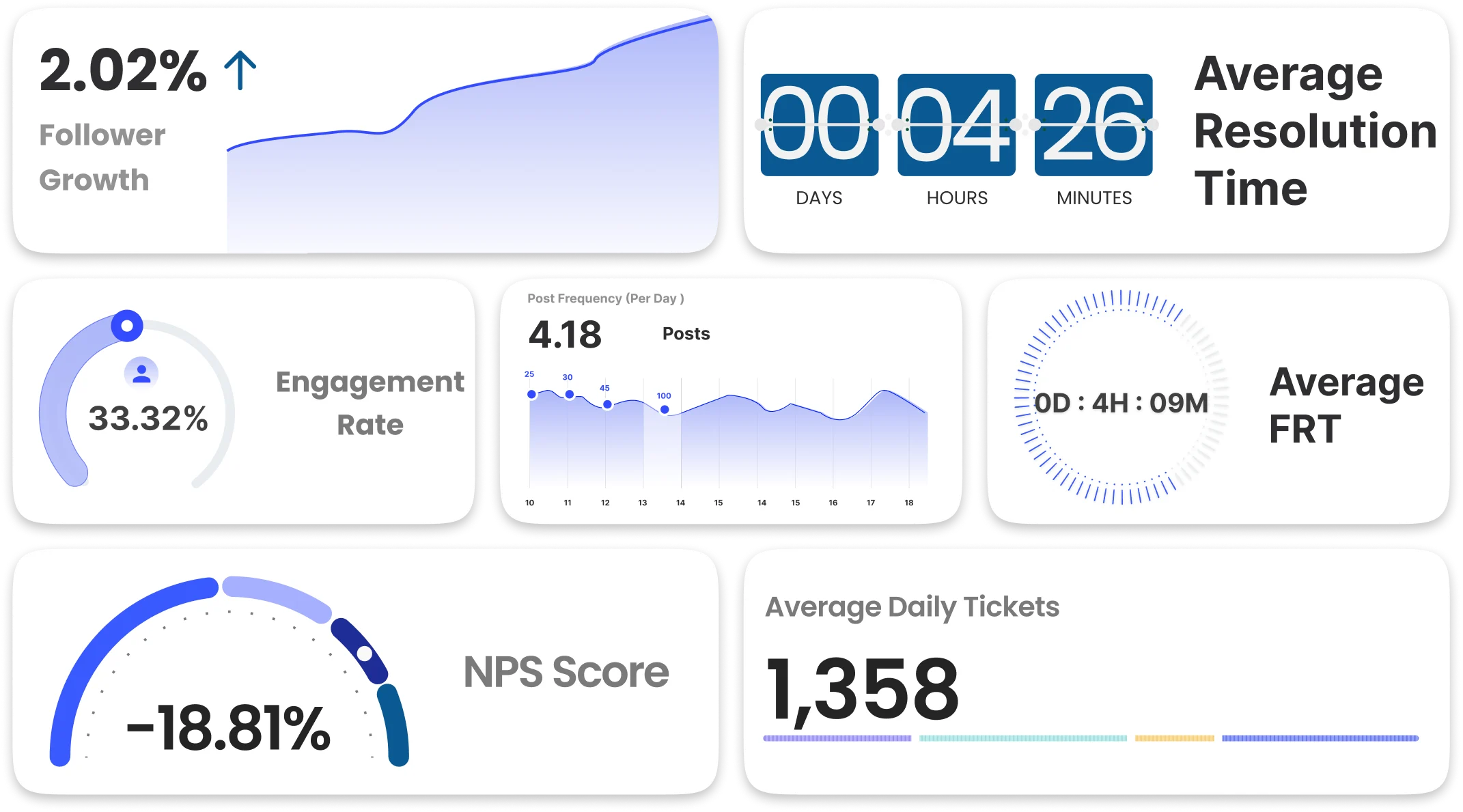
With engagement at 33.32% and more than 1,300 daily tickets, gaming brands operated under sustained pressure. What stands out this month is not just speed, but balance. Response and resolution times stayed tight, and sentiment moved into positive territory, signaling that players are starting to feel heard and supported.
KPI Snapshot
KPI | Value |
Follower Growth | 2.02% |
Engagement Rate | 33.32% |
Post Frequency (per day) | 4.18 |
First Response Time (FRT) | 4 hours, 9 minutes |
Average Resolution Time | 4 hours, 26 minutes |
Net Promoter Score (NPS) | 18.81% |
Average Daily Tickets | 1,358 |
CXM Diagnosis
The gaming sector continues to operate at extreme scale, but November shows meaningful progress. A 4-hour first response time is reasonable given the volume, and resolution happening within the same window helps prevent issues from escalating into public backlash.
The positive NPS of 18.81% is a notable shift. Players are not just getting answers quickly, they are getting outcomes that feel fair and consistent. This matters in gaming, where frustration often stems from perceived imbalance, unclear decisions, or repeat issues rather than pure delays. Speed paired with clarity is paying off.
What’s Driving Customer Frustration or Sentiment
- Server instability or lag during peak play hours
- Account access issues and moderation-related concerns
- Questions around in-game purchases, refunds, or rewards
- Frustration when automated replies lack context
- Positive sentiment when issues are resolved decisively and explained clearly
CX Priorities for December
- Maintain sub 5-hour response and resolution times despite rising volume
- Improve transparency around enforcement, bans, and gameplay changes
- Use proactive communication during outages or updates to reduce ticket spikes
- Balance automation with human review for sensitive player issues
- Leverage positive NPS to identify what players value most in support interactions
Final Word
November shows that gaming CX is moving in the right direction. High engagement no longer automatically means high dissatisfaction. When speed is matched with fairness and clarity, even large volumes can be handled without eroding trust. The studios that continue investing in communication and consistency will turn active players into long-term advocates.
Over-The-Top (OTT) Platform Industry Monthly CXM Report: April 2025
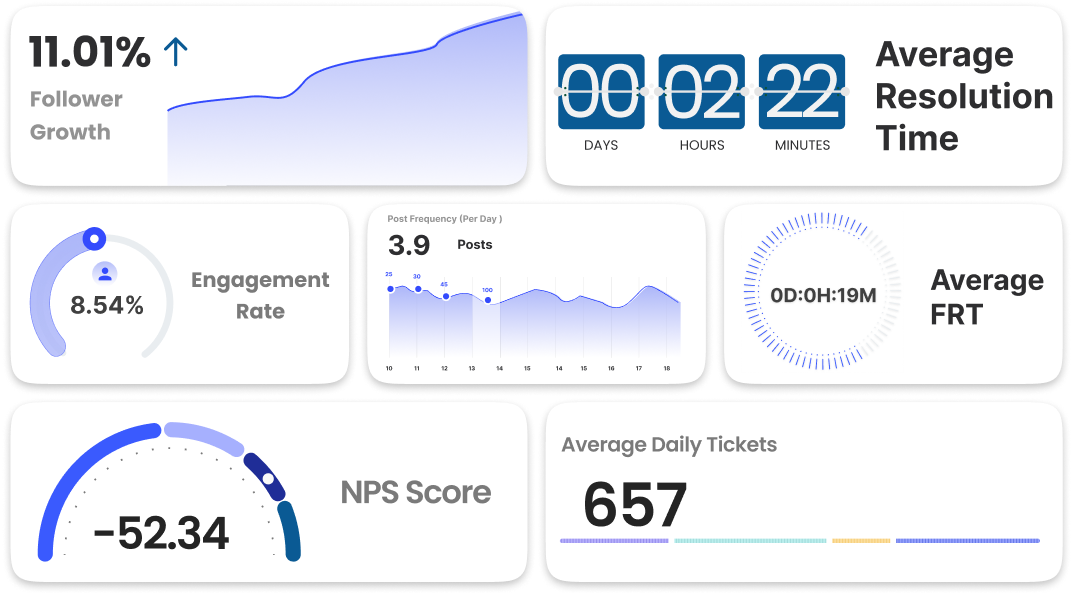
April 2025 showcased the paradox of digital entertainment: massive engagement, rapid growth, and yet a deepening challenge with customer sentiment. OTT platforms continue to dominate user attention spans, but delivering seamless, always-on experiences across millions of screens has never been more demanding. While operational metrics like response and resolution times are impressive, the low NPS reveals an urgent need for better customer experience design.
Digital Engagement and Growth Metrics
- Follower Growth: 11.01%
The OTT industry continues its steep digital ascent. With more users subscribing and following across social platforms, brands must be prepared to handle higher volumes of interaction—not just in content promotion but in real-time customer support. - Engagement Rate: 8.54%
Strong engagement underscores audience interest in show announcements, trailers, cast interactions, and meme-worthy moments. However, rising engagement also acts as a double-edged sword—exposing service issues, pricing dissatisfaction, and content criticisms in equal measure. - Post Frequency: 3.90 per day
A high publishing cadence keeps OTT brands top-of-mind. The opportunity here is to strike a balance between promotional posts and service-oriented communication that addresses user concerns (e.g., outage clarifications, subscription guides, and content navigation tips).
Customer Service Performance
- Average First Response Time (FRT): 19 minutes
Exceptionally fast. Most OTT platforms have mastered real-time triaging using automation, which sets a high industry benchmark for others. Maintaining this pace during peak traffic moments (e.g., premiere weekends or outages) will be crucial. - Average Resolution Time: 2 hours, 22 minutes
A stellar resolution time, especially considering the scale. However, resolving quickly is not always equivalent to resolving well. Negative sentiment suggests that many users still leave these interactions unsatisfied. - Net Promoter Score (NPS): -52.34
A deeply concerning figure. While users flock to OTT platforms for entertainment, loyalty suffers due to pricing confusion, poor content recommendations, login or playback issues, and generic support responses. The emotional connection is shallow, and frustration escalates quickly. - Average Daily Tickets: 657
A high volume reflective of the low barrier to customer outreach. Platforms must not only scale efficiently but ensure that responses are empathetic and personalized—not just fast.
Strategic Recommendations for May 2025
- Rebuild Trust Through Personalization
Negative NPS often stems from users feeling unheard or underserved. Start by refining content recommendation algorithms, offering more control over profiles and billing, and personalizing support interactions beyond templated replies. - Use Social Listening to Pre-Empt Escalations
Customer complaints rarely start as tickets. By proactively monitoring social buzz around playback glitches, price hikes, or unpopular UI changes, platforms can get ahead of discontent and win back goodwill. - Balance Automation With Human Touch
While response speed is a win, low NPS suggests a disconnect. Introduce hybrid resolution flows—use bots for basics but escalate billing, access, and account complaints to trained agents. - Invest in Clearer Communication
Many users are confused by pricing tiers, trial cut-offs, and regional availability of content. Clear in-app guides, billing breakdowns, and proactive notifications can resolve friction before it becomes anger.
Looking Ahead to May 2025
The OTT industry doesn’t lack attention—it commands it. But attention isn’t loyalty. CX leaders in this space must move beyond vanity metrics and focus on delivering consistent, transparent, and emotionally intelligent service. Because in a world where switching platforms takes seconds, experience is the only long-term differentiator.
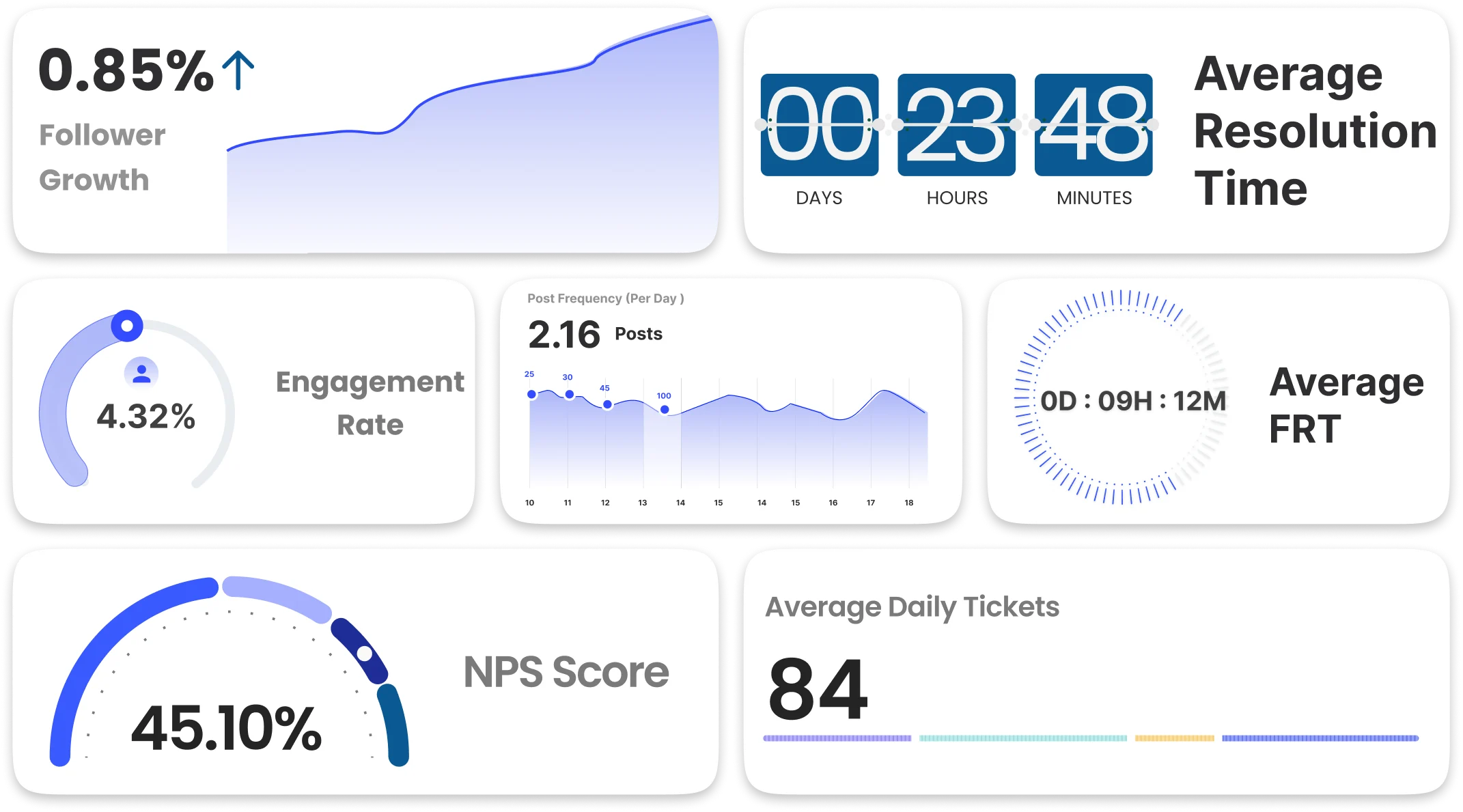
Manufacturing Industry Monthly CXM Report: November 2025

November was a steady month for the manufacturing sector, marked by strong customer confidence but slower service momentum. Engagement remained measured and practical, reflecting an industry where conversations are driven by operations, delivery timelines, and technical support rather than promotion. While sentiment stayed firmly positive, response and resolution speeds continued to lag behind expectations.
With customer trust intact and ticket volumes manageable, the opportunity for manufacturing brands lies in tightening service execution. Customers believe in the product and the partnership. What they want now is quicker acknowledgment and clearer follow-through.
KPI Snapshot
KPI | Value |
Follower Growth | 0.85% |
Engagement Rate | 4.32% |
Post Frequency (per day) | 2.16 |
First Response Time (FRT) | 9 hours, 12 minutes |
Average Resolution Time | 23 hours, 46 minutes |
Net Promoter Score (NPS) | 45.10% |
Average Daily Tickets | 84 |
CXM Diagnosis
The NPS of 45.10% is a strong indicator of customer trust. Clients are generally satisfied with outcomes, product reliability, and technical expertise. When issues are resolved, confidence is restored. The challenge lies earlier in the journey. A 9-hour first response time feels slow in a business environment where delays can impact operations, production schedules, or revenue.
Resolution timelines approaching one full day extend this uncertainty. With only 84 daily tickets, these delays are unlikely to be volume-driven. Instead, they point to internal coordination gaps across service, logistics, and technical teams. Customers are willing to wait for the right answer, but not without updates or acknowledgment.
What’s Driving Customer Frustration or Sentiment
- Slow acknowledgment of service, maintenance, or delivery-related queries
- Delays in updates on parts availability or shipment status
- Multiple handoffs between departments without clear ownership
- Limited proactive communication during issue resolution
- Positive sentiment when issues are resolved thoroughly and explained clearly
CX Priorities for December
- Reduce first response time to under 3 hours for all customer requests
- Improve coordination between service, logistics, and technical teams
- Introduce proactive updates for delays or complex resolutions
- Clarify ownership early so customers know who is handling their case
- Use high NPS feedback to identify what customers value most in support interactions
Final Word
November confirms manufacturing’s CX strength and its opportunity. Customers trust the brand and the product, but patience is tested by slow communication. The manufacturers that stand out next month will be those that match their operational reliability with faster, clearer service and make every interaction feel as dependable as the product itself.